Fixed wooden pole
Pole Mallakhamb
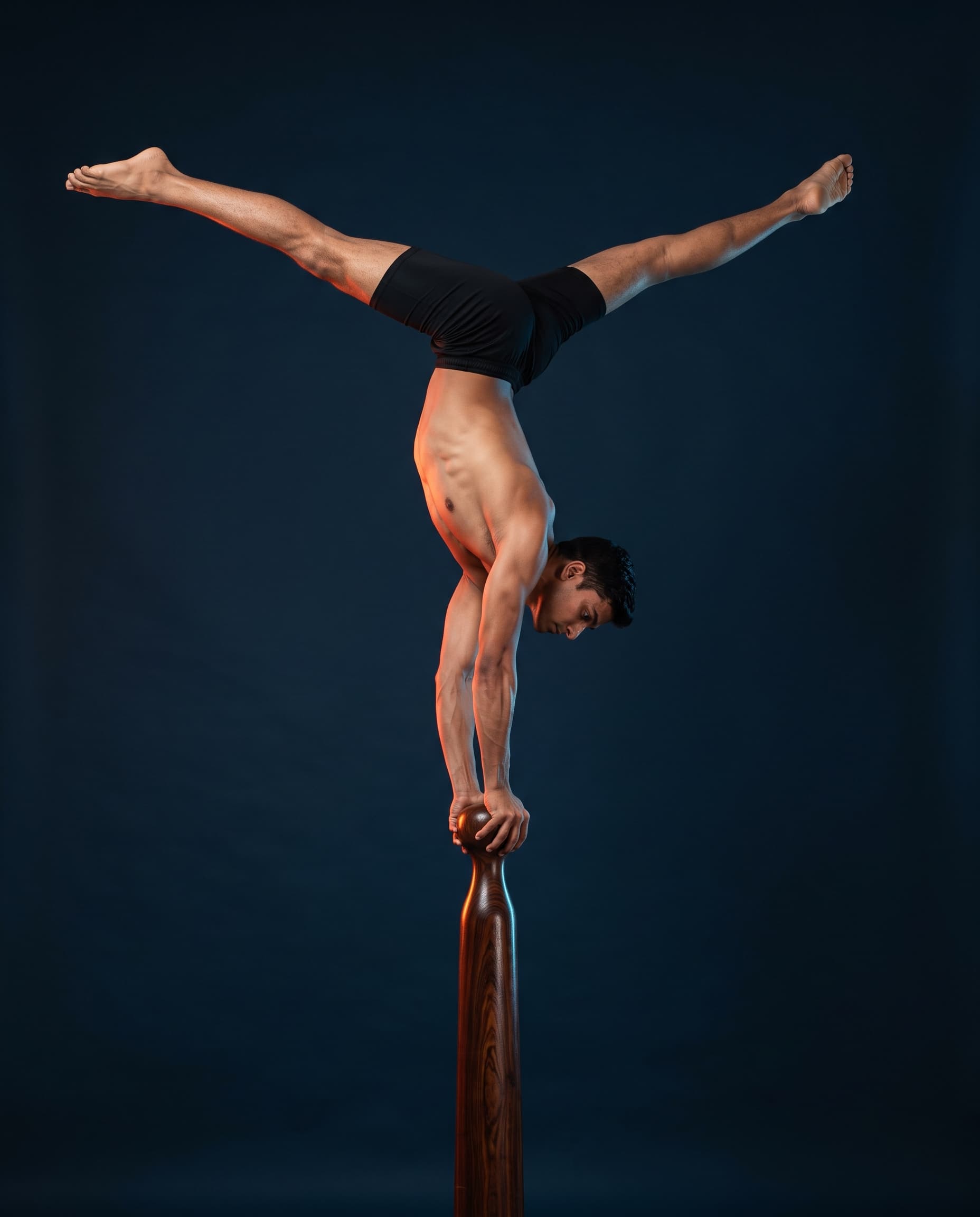
The original form. An upright pole of polished teak or sheesham, about 2.6 metres tall, tapering from a broad base to a rounded head. Athletes climb, catch, invert and balance on it at speed.
TraditionDisciplinePerformance
800+
Years of tradition
2.6 m
Standard pole height
Where ancient Indian tradition meets elite physical training. Build strength, flexibility, balance and absolute body control through the art of Mallakhamb.
The art of Mallakhamb
Mallakhamb is a traditional Indian sport in which athletes perform aerial yoga postures, wrestling grips and balances on a vertical wooden pole, a hanging pole or a rope. First recorded in 1135, it builds strength, flexibility, balance and focus like few other disciplines.
At Stambh, Mallakhamb is taught as a complete athletic system. Traditional technique sits alongside modern strength and conditioning, so every athlete grows stronger, moves with more control and learns to stay composed at height.
The three disciplines
Mallakhamb is practised on three apparatus, and each one tests the body in a different way. The fixed pole builds raw strength and grip, the hanging pole demands balance in motion, and the rope rewards flexibility and precision.
The original form. An upright pole of polished teak or sheesham, about 2.6 metres tall, tapering from a broad base to a rounded head. Athletes climb, catch, invert and balance on it at speed.
A shorter pole hung from hooks and a chain. It sways and turns with every movement, so each hold demands constant correction, timing and core control.
A cotton rope about 5.5 metres long. Athletes wrap, lock and hold yogic postures on it, relying on grip, flexibility and precise body positioning.
Training
Training at Stambh follows a clear progression. Athletes move through four stages, from mobility and grip on the ground to complete routines on the pole and rope, and advance only when their body is ready for the next load.
Mobility and grip
Joint preparation, grip conditioning and body awareness, built on the floor and the lower pole.
Holds that last
Bodyweight conditioning for the core, shoulders and legs, so every hold becomes stable and safe.
Climbs and inversions
Catches, inversions and balances, learned in small progressions with a coach at your side.
Complete routines
Linking skills into timed routines for gradings, demonstrations and competition.
Achievements
The achievements of Mallakhamb span nearly nine centuries. From its first written mention in 1135 to the first World Mallakhamb Championship in 2019, it has grown from a wrestlers' training tool into a sport celebrated on national and world stages.
1135
The Manasollasa, a Sanskrit text by the Western Chalukya king Someshvara III, is the earliest written mention of Mallakhamb.
1800s
Balambhatta Dada Deodhar, teacher to Peshwa Baji Rao II, revives interest in the art.
1936
Mallakhamb is demonstrated at the Summer Olympic Games in Berlin.
2013
On 9 April 2013, Madhya Pradesh declares Mallakhamb its official state sport.
2019
Mumbai hosts the first World Mallakhamb Championship.
Gallery
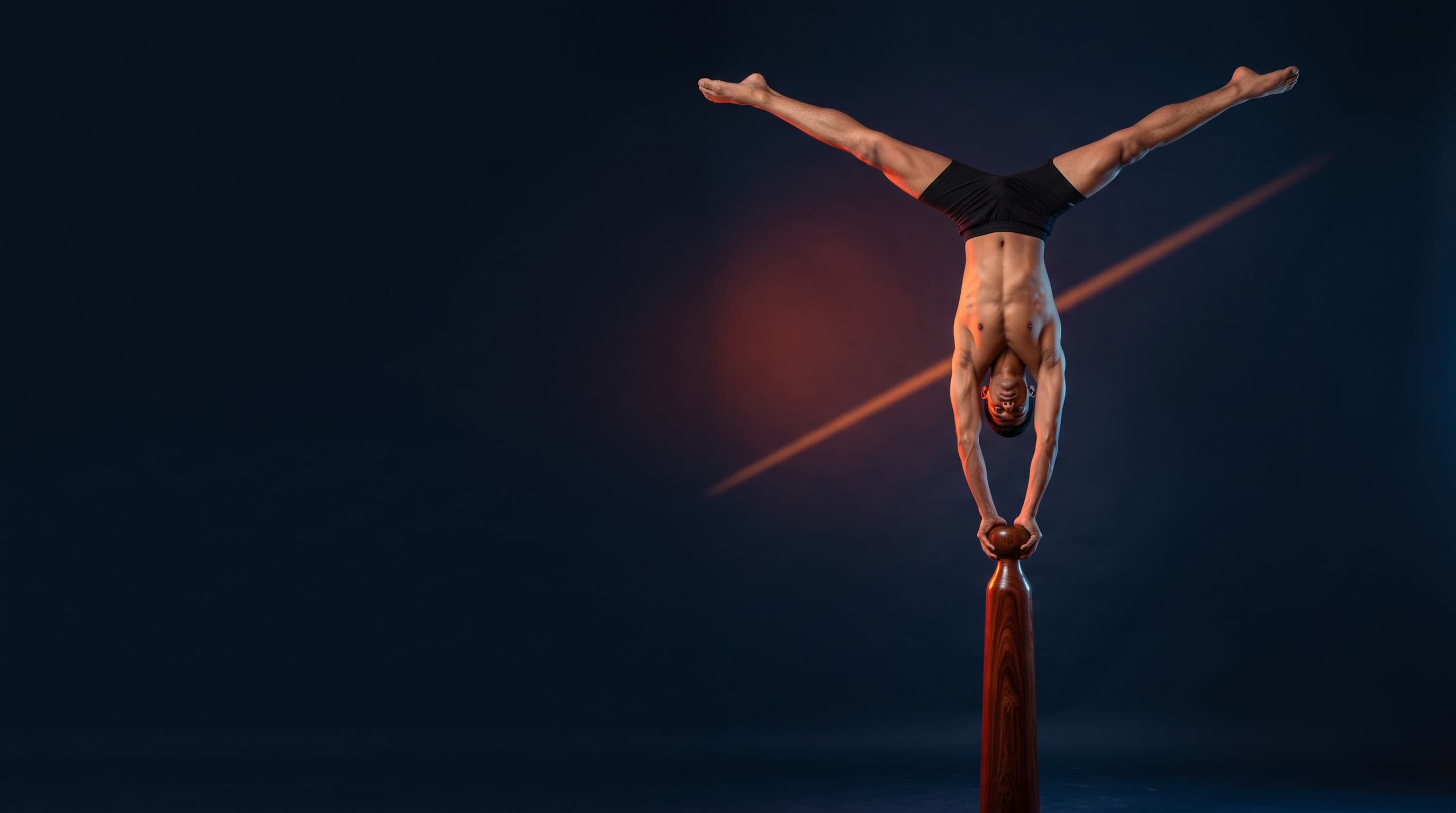
Moments from the pole: the grip that holds a body in the air, the reach of a full split and the focus it takes to stay still at height.
Join the academy
Request a trial class and a coach will contact you to find a time that suits you. Tell us who will be training and anything we should know, such as previous sport experience or past injuries.
A movement assessment
A coach checks your mobility, grip and core strength to find the right starting point.
Your first holds
Basic grips and holds on the lower pole or rope, with a coach spotting every attempt.
A clear path forward
A recommended stage and schedule matched to your age, level and goals.
